

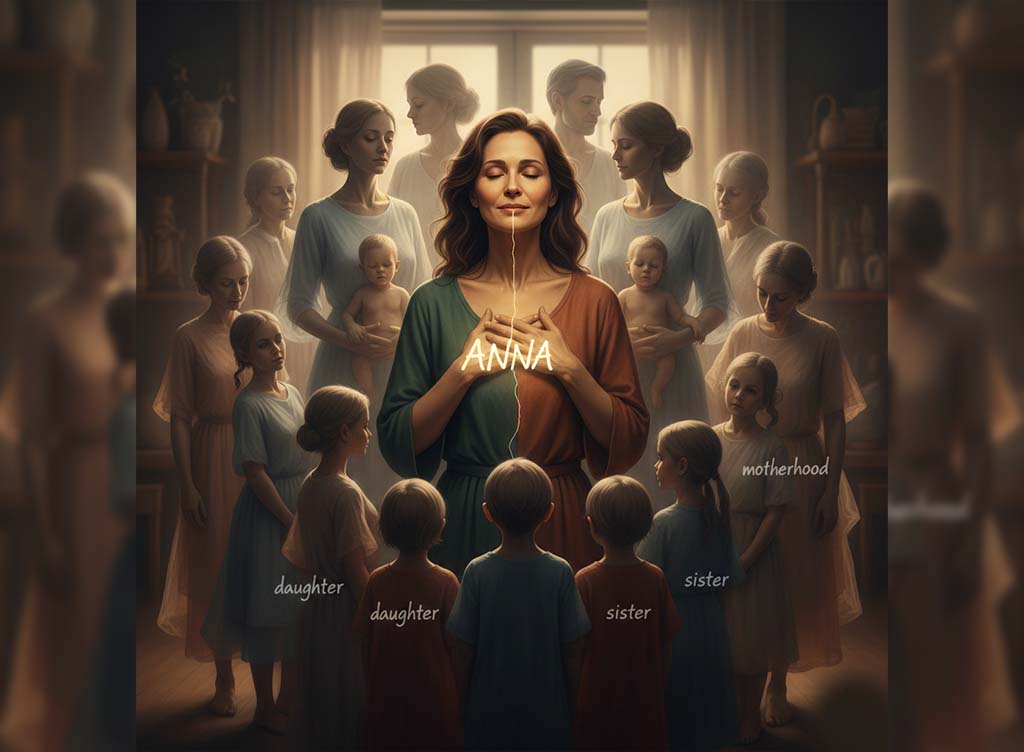
The life of a woman normally begins before she realizes what choice means.
The moment she’s born, her identity becomes – “the daughter” of the household.
That’s how society wraps her within its shackles even before she learns her first word.
The tender parenting soon morphs her into a kinder being, someone who can handle the gossamer fabric of emotions. She subtly grows up by learning the implicit rules of silent nurturing.
Yet, at what cost?
She observes her mother go round the house like clockwork – efficient, enervated, never quite stopping. She is taught at a tender age that love does not necessarily reveal itself
stridently. Sometimes it cooks. Sometimes it cleans. In some cases, it remains quiet in order to maintain peace. Fathers instill discipline, values, and boundaries. Some teach tenderness. Others teach distance. By the end of it all, she gets to know that her place is accompanied by expectations much more than liberty or choice.
She molds herself into a person who knows how to live up to everyone’s expectations, while her own remain untouched, uncared for.
Soon enough, she becomes a sister.
And gradually, she again acclimatizes. This time, fitting into a role she may never fully make peace with.
She is taught to share – rooms, time, and praises. She learns when to step aside. She is the peacemaker, even when everyone forgets to consult her. Moods come first to the one who has no words. Nobody recognizes her emotional labor.
They call it being “good.” They call it being “sincere.” And she holds that label close to her as if that’s what her identity is.
Marriage comes next.
Not suddenly. But heavily.
As she gets married, her world is both enlarged and narrowed. New beings come into her life, while others slowly drift apart. She starts living in a new house, new rules, new versions of herself. She learns how to dilute her views. How to talk without being commanding. She learns how to love without asking for too much. She remembers birthdays that are not hers. She keeps track of family stories she was never part of.
Everybody around her soothes her and says that “adjustment is love.”
Nobody questions the cost of it.
She stays silent when all she wants to do is scream.
But now she is the “wife” of someone, someone she really adores.
And love, here, comes with careful restraint.
She concocts delicacies for her husband’s office parties.
She waits quietly as her food works its magic, and his husband’s promotion inches closer.
And her career waits, paused, unnamed, easy to postpone.
When asked, she says, “I can manage. I can jump back in whenever I want.”
But then,
Motherhood comes as an ultimate stamp of purpose.
Now she is needed all the time.
Career? That can wait!
Now,
Her body is no longer hers. Her life is broken into bits. For her, sleep has become optional. Her dreams have become “later.” She gives without counting. She sacrifices even when she is not full, even when she has nothing to give. She now has a family of her own. She becomes the one everybody looks up to, and the one nobody looks after. Her name is again lost in oblivion. This time, she identifies herself with “maa,” which is a word for tenderness and expectations.
In case she has a son, she shows him how to hope.
She wants him to be powerful, strong, and competent.
In case she has a daughter, she raises her carefully.
She educates her on how to survive in a world that will not give back what it takes.
She teaches her child how to respect and slowly forgets how to ask for it herself.
She builds their confidence. But she doubts her own relevance. One day, they grow up and walk ahead of her, just as she taught them to. And she watches, proud and quiet, standing slightly behind.
At every stage, she belongs to someone.
Daughter. Sister. Wife. Mother.
But somewhere in the middle of this life, usually late at night, when the house finally sleeps, she wonders who she is without these names. She cannot remember when she last did something only because she wanted to. She cannot remember when her thoughts did not revolve around someone else’s needs.
Our society praises sacrifice.
It rarely questions it.
Women are taught that giving is a virtue. That endurance is strength. That selflessness is what love really means. And so many women live their lives without ever asking themselves, “What do I really want?”
A woman does not disappear. She becomes layered.
And one day, if she is lucky, she starts peeling those layers back, not to reject her roles, but to find herself underneath them.
She realizes she is not only useful.
She is present. She is thinking. She is allowed to rest.
And when she finally asks who she is, she does not answer with a relationship.
She answers softly, honestly.
She says her own name.