

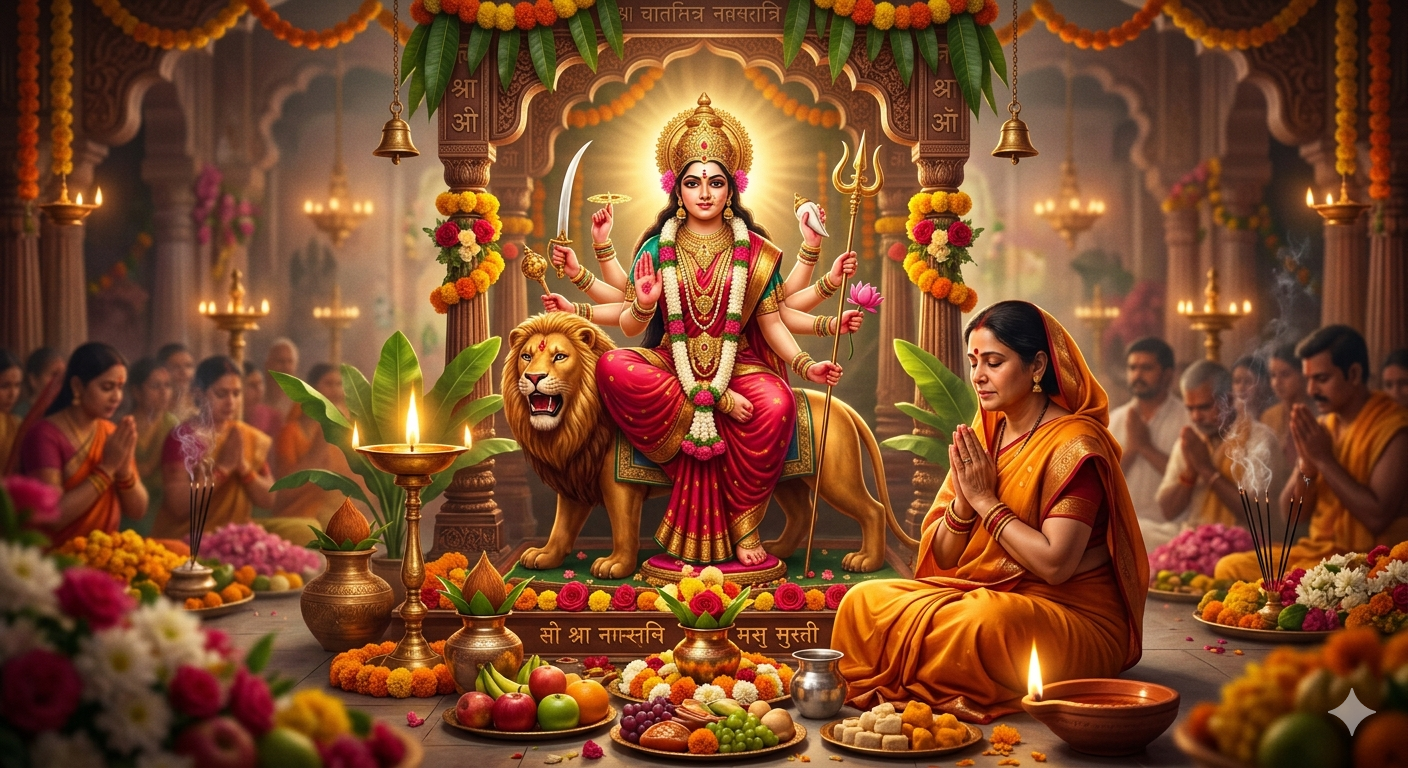
The Divine Feminine Energy within Sanatan Dharma
As the lunar month of Chaitra sets in, there is a slight shift that starts to take place in the spiritual environment of India. Chaitra Navratri is a sacred period that is devoted to reflection on the Divine Mother. These nine days are not merely a blind practice of rituals. It is a soul-searching experience into the inexplicable power of Shakti – the universal energy that keeps things going.
Divinity is often represented in masculine metaphor – creator, king, lawgiver, architect. Sanatan Dharma, on the contrary, represents a completely different intuition. Life itself is vibrant with the rhythm of the Divine Mother.
Maa is not just a symbolic decoration in theology. She symbolizes the vitality of reality. The Vedas and Puranas describe creation as a natural process, a cosmic unfolding that is maintained not by authority but by energy. That energy is called Shakti. All the stars that burn in the distant galaxies, all the seeds that burst on the earth, all the ideas that flash through the mind of humans, are the results of that delicate power.
Shakti has a contradictory nature. She grows and disintegrates, consoles and frightens, protects and liberates. The iconography of Durga, Kali, Lakshmi, and Saraswati represents different aspects of existence, abundance, knowledge, destruction, and renewal.
This multiplicity reveals truths that philosophy usually cannot express: Life is a process of creation and destruction, gentleness and violence, light and darkness.
During Chaitra Navratri, devotees fast, pray, and maintain self-discipline. The symbolic actions behind these rituals are more profound. Every night is a journey of self-exploration into the strata of the human consciousness.
In Sanatan philosophy, Shiva, devoid of Shakti, is nothing. This kind of metaphysical understanding puts the feminine above sociological arguments.
When civilisations disregard the sacred feminine, they slowly become imbalanced.
Power becomes hard
Intelligence becomes sterile, and
Spiritual life becomes abstract.
The worship of Maa brings balance. Her existence helps humanity remember that creation is born out of nourishment and patience.
Chaitra Navratri festival asks a subtle question to the inner soul of each person: Where does the living force of the universe reside within each soul?
The sages have a bold answer. The same Shakti, worshipped by mantras, lamps, and flowers, also slumbers within the human heart. She wakes up with strength, sympathy, sanity, and controlled consciousness.
During these nine days, lamps are lit before the image of the Goddess. But the real light shines in the invisible corridors of consciousness. In that silent sanctum of the self, the eternal Mother keeps up her cosmic dance – the one that keeps the worlds in their orbit and puts life into existence itself.