

You Can Find Pleasure in Benevolence
Generosity is a virtue that is related to kindness, compassion, and above all, humanity. It is described as the willingness to give away everything you have, like money or resources, without any expectations in return.
It shifts the focus from greedy reception to voluntary donation. It’s a mindset that sees sharing as caring, an effort to improve the well-being of the disadvantaged rather than a favor.
Generosity is a praiseworthy but rare attribute. Even if a person is wealthy, they are too engrossed in satisfying their never-ending desires without any consideration for the poor and deprived people. On the other hand, a generous person, rather than spending or saving money, donates it and tries to distribute economic wealth among people.
However, this act of charity is not restricted to money. It may also include things that one may need, such as food, clothing, or other items that people use every day. It may also include kind-hearted actions such as helping people with tasks that need to be done, helping people who are distressed, or even spending time doing volunteer work, such as mentoring.
Such selflessness increases inner happiness, instills gratitude, and brings contentment. It motivates us to adopt an open-hearted approach to life, enabling us to live it fully.
In our country, generosity is not a theoretical idea limited to textbooks. It’s a core moral value, something that is deeply rooted in our culture. We don’t preach. We assimilate and practice it because charity begins at home.
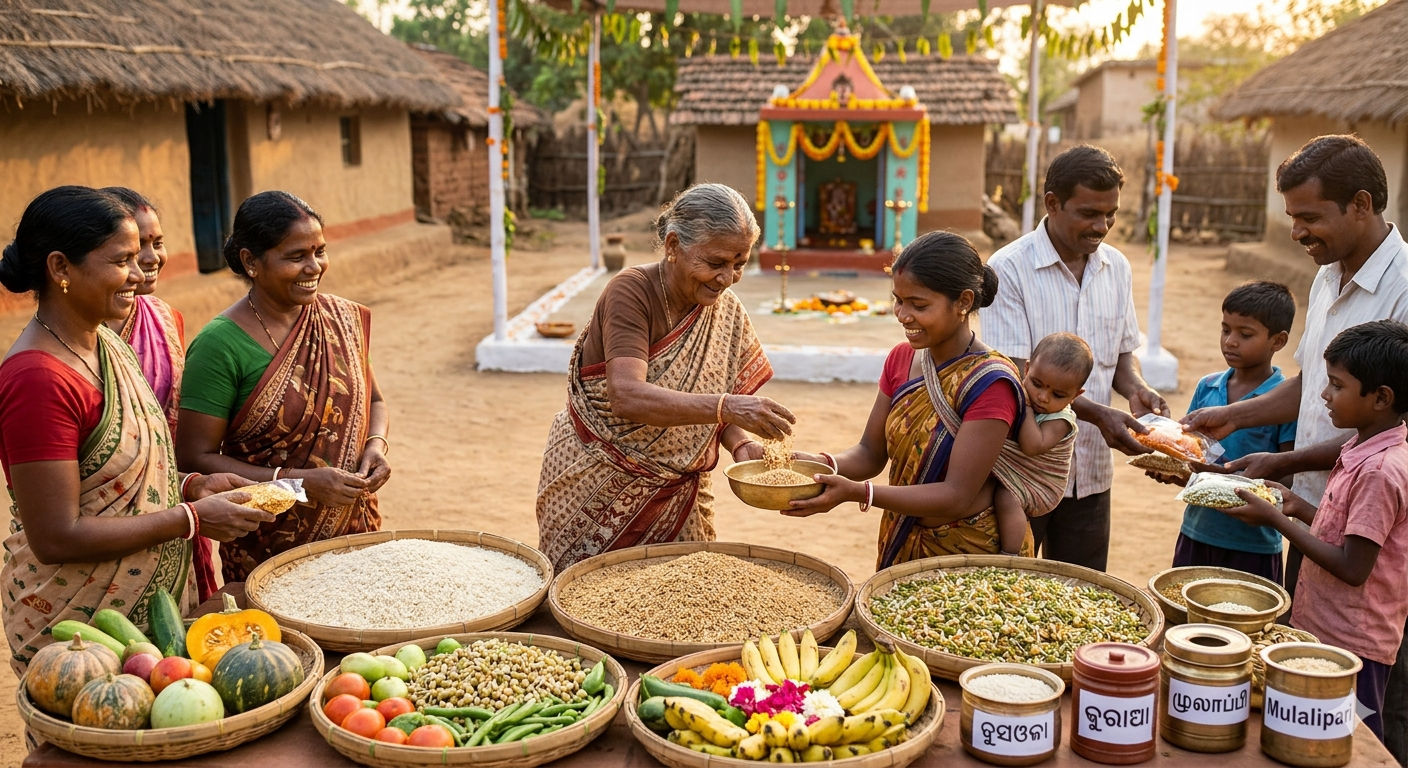
Festivals like Odisha’s Nuakhai and Tamil Nadu’s Mulaipari showcase this very spirit.
In Nuakhai, after harvesting, the crops are first donated to nature and shared within the community. Moreover, in the Mulaipari ritual, women offer sprouts to the village deity. They wish for prosperity and a flourishing harvest.
Generosity is the best way to thank the Omnipresent for the abundance in our lives.
But true generosity is shown through sacrifice. To sacrifice one’s own comfort for the sake of others is true benevolence.
By using an anecdote involving Mahatma Gandhi, one can explain this concept. This happened while he was traveling to different villages to collect funds for the Khadi Project.
He gave all the money that was collected to Jamnalal Bajaj, who managed his accounts, except for half an anna from a poor lady. His explanation was simple –
The woman had gifted him all she possessed. So, it was an invaluable treasure for him.
Start being generous, no matter how small your contribution is. What matters is the depth of your sense of obligation to society and your eagerness to look beyond yourself.
When you help people, you can encourage them to do good for others. In the long run, kindness comes full circle, because what we give is what we get.