

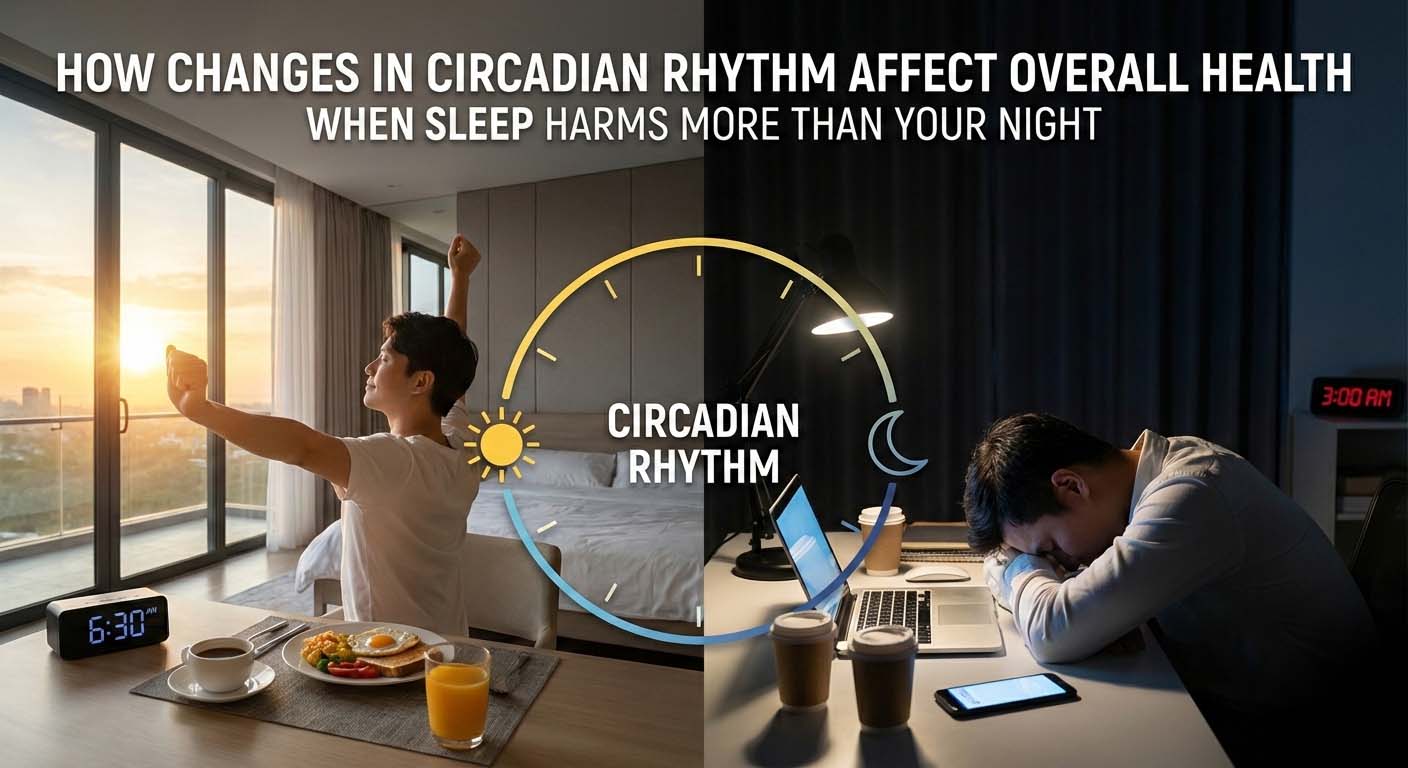
A night of poor sleep can ruin our entire week. We’ve all been there! Our thought process becomes slow, and even minor tasks take more effort than usual. Coffee helps, but only for a short period of time. By evening, we start feeling exhausted again, but sleep still feels strangely out of reach.
You might blame your tiredness for this change, but what’s happening beneath the surface is more than just exhaustion. Our bodies run on a delicate internal clock, which is called the circadian rhythm. It acts like a 24-hour clock in our brain and is responsible for regulating when we feel awake, hungry, or when our body needs to rest and repair.
Circadian rhythms control several biological activities, including metabolic functions. When circadian rhythms match perfectly with both the natural cycles of light and dark, everything in the body operates properly. Your body’s energy levels remain stable, you can sleep without any difficulty, your digestive system operates in a regular manner, and your mental acuity remains intact.
But when our circadian rhythms are disrupted – due to a lack of sleep (staying up too late), inconsistent work hours, excessive screen exposure, and constant travel – the physical effects can easily extend far beyond just feeling tired.
This internal clock is also connected to our mental well-being. When everything works properly, the mind stays relaxed. Thoughts flow better. Emotions feel easier to manage. However, when the rhythm is lost, discomfort soon begins. Anxiety creeps in. Depression sets in. Days begin to merge with each other, and motivation fades away silently. Even resting doesn’t feel sufficient, and we feel as if our minds aren’t shutting off at all.
In the long run, this imbalance demands more of the body than it can provide. Abnormal sleep habits impose an unpleasant burden on the heart. It interferes with the normal functioning of the body and makes the mind less alert.
The body always prefers order. It uses clear indications to understand when to release stress hormones and when to relax. When these signals come late or in the wrong order, the body overworks to maintain the pace, ultimately causing more exhaustion.
The positive thing is that to get the balance back, one does not need to make drastic changes and follow strict schedules. It starts with consistency.
Waking up at approximately the same time each morning provides a clear reference to your body. At night, when you turn down the screens early, your brain will know that it is safe to relax, helping you fall asleep quickly.
The morning sun can also help reset your internal clock. Treating rest as something intentional – not something squeezed in at the end of the day – makes a quiet but important difference.
When you start respecting your circadian rhythm, the change will become noticeable. Energy and focus will increase. Moods will feel less reactive.
Sometimes, feeling better is not about working harder. It is about taking things slowly to keep pace with yourself.