

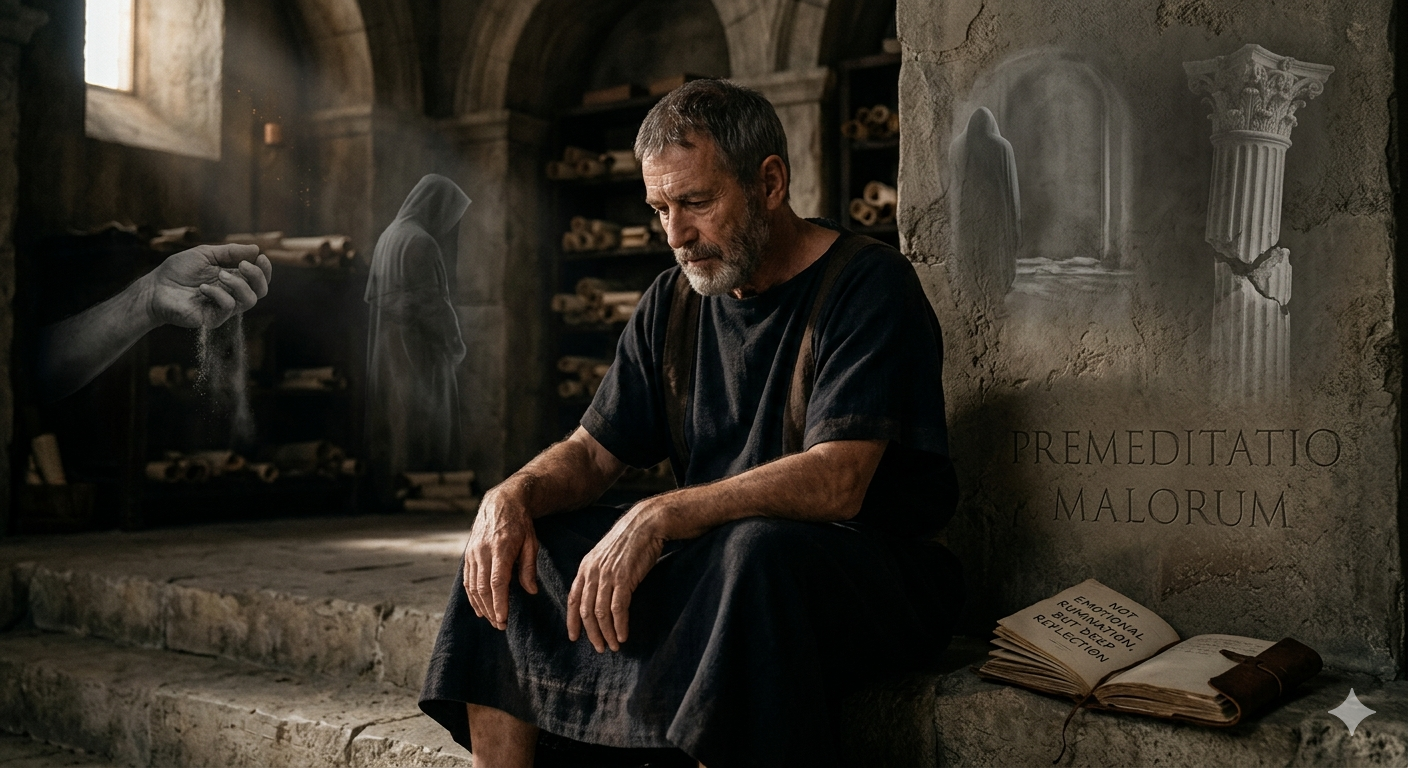
Not An Emotional Rumination, But A Deep Reflection
Imagine yourself in the worst situation – devoid of your prized possessions, bereaved of your close relations, at the unfathomable depths of failure, without any hope.
How would you feel?
That’s negative self-visualization. Referred to as ‘Premeditatio Malorum’ in Latin, this technique was historically practiced by Stoics such as Seneca, Epictetus, or Marcus Aurelius. It proposes a surreal yet effective way to deal with unwanted real-life situations.
This philosophy diverges from the conventional path of viewing optimism as the only driving force of life.
Often, people are reluctant to change the course of their lives or adopt something new because of the fear of uncertainty. This anxiety paralyzes them mentally and emotionally, preventing them from moving ahead.
However, by thinking of the possible negative consequences, you are able to overcome these mental barriers. By thinking about the worst that can happen to you, you are able to see your vulnerable side more clearly. It relieves your unnecessary expectations and eases your stress. It breaks your inertia, prompting you to take action without any hesitation.
Such pessimistic envisioning also helps you anticipate obstacles. Before confronting the challenge, you’ll be able to think of the possible ways to tackle it. This kind of preparedness for future challenges will encourage you to face the situation rather than accept it.
We should remember that external forces influencing our lives are beyond our control. Changes in our lives are imminent and are not always guaranteed to be positive.
When we have something, we take it for granted until we lose it. This practice makes us consider everything in our lives as a privilege, rather than dismissing it as a mere necessity. It invokes a sense of gratitude. So, instead of depressing thoughts, the practice of ‘Premeditatio Malorum’ brings satisfaction and happiness for being in better conditions than those imagined.
Negative visualization is a brief exercise of foresight, not an obsessive dwelling on the future. The purpose is to develop your resilience against unforeseen circumstances, not to cloud your mind with apprehension.
This technique is a practical approach because…
Life is not a bed of roses.
This gives you the courage to face adversity with utmost confidence,
Makes you live without the dread of doom,
Metamorphoses your outlook toward disruption,
Motivates you to embrace the inevitable challenges,
And empowers you to turn the tide in your favor.
Let go of hedonic adaptation and practice negative self-visualization.
Believe in “Hope for the best but prepare for the worst”- a wisdom that truly makes sense.